- Home
- News
- WoW Midnight
- WoW Talebound Guide: Classes, Stories, Progression, and Rewards in Patch 12.1.7
WoW Talebound Guide: Classes, Stories, Progression, and Rewards in Patch 12.1.7
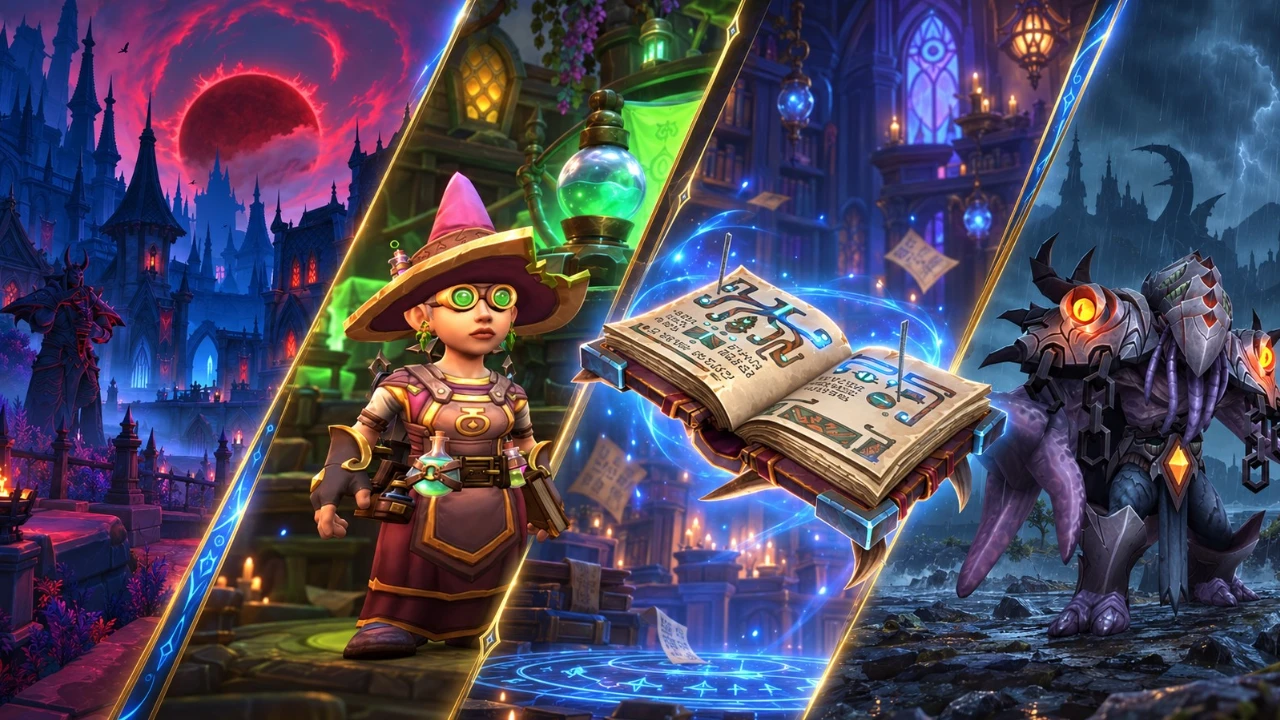
Talebound takes World of Warcraft somewhere different: inside the unsettling stories of a mysterious storyteller, with a new character, a dedicated combat kit, and a village that becomes your refuge between adventures. Instead of bringing your usual raid rotation, you choose how to fight through tales populated by witches, monsters, and creatures that probably should have stayed between the pages.
Coming with Patch 12.1.7: Echoes of the Worldcore, the mode combines replayable PvE action with cosmetic rewards for your World of Warcraft collection. The appeal is not just the Shadowbound Storybook mount. Talebound also has its own classes, progression systems, currencies, pets, and Housing rewards.
PTR guide, updated October 17, 2026: Talebound is available for testing, but the live release date and final reward requirements have not been established in the cited previews. Treat abilities, unlocks, and reward availability as subject to change.
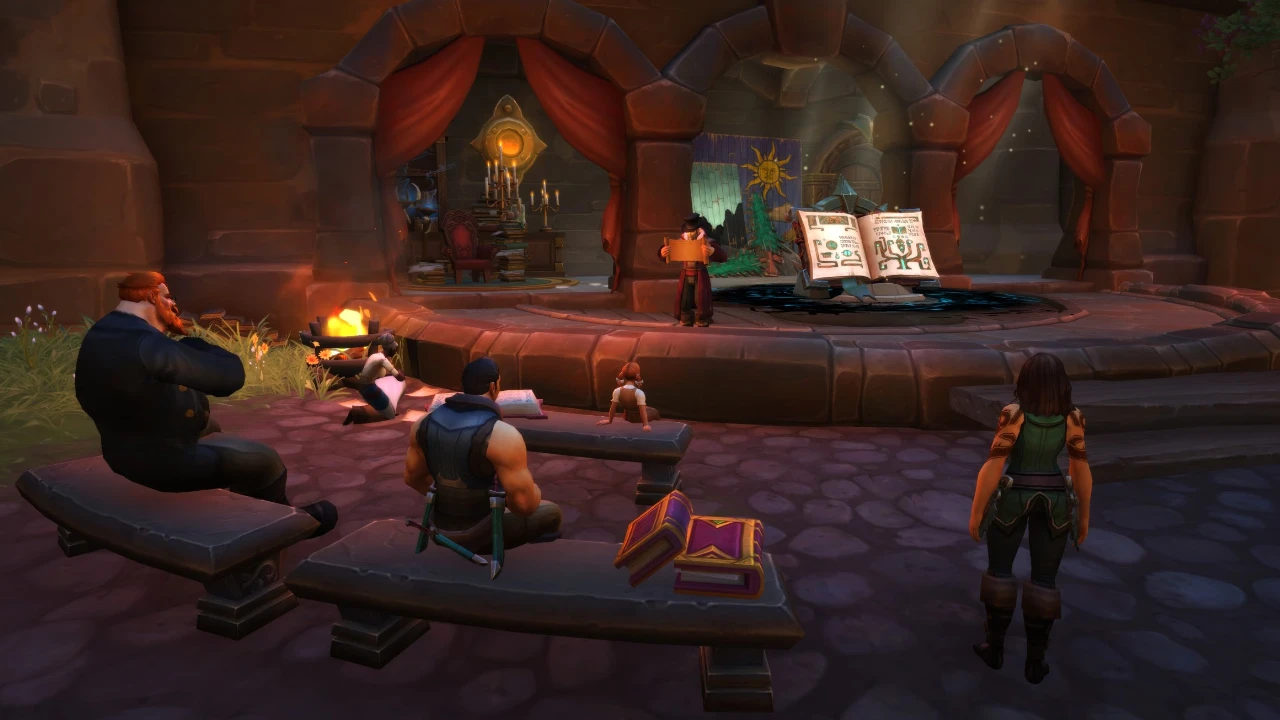
The Storyteller introduces another tale. Official image: Blizzard Entertainment.
What Is Talebound, and How Do You Start?
Talebound is a separate game mode within World of Warcraft, rather than a dungeon you enter on your regular character. You create a ready-to-play character belonging to one of three custom classes: Slayer, Inquisitor, or Witch. Your adventures begin in Quillgrave, where the Storyteller provides the tales you will explore.
- Access Talebound through the World of Warcraft game menu when the mode is available to your account.
- Create a Talebound character and select a class based on its combat style.
- Explore Quillgrave and become familiar with the services available between adventures.
- Enter a tale, learn its enemies and encounters, then return to prepare for another attempt.
You can play solo or with friends, and the guide confirms that you can create more than one Talebound character. You are not permanently committing your entire account to your first class choice. More importantly, all three classes can double-jump, dodge, and guard. Learning those shared tools matters before you start worrying about an optimized build.
Which Talebound Class Should You Choose?
| Class | Combat Identity | Consider It If You Prefer |
|---|---|---|
| Slayer | Sword attacks, firearms, explosives, and mobile weapon skills. | A physical monster-hunter style with close-range pressure. |
| Inquisitor | Offensive holy magic, empowered attacks, and burning enemies. | Spellcasting with a mixture of mobile attacks and deliberate commitments. |
| Witch | Lightning, poisonous creatures, ravens, and temporary shapeshifting. | An unconventional caster with familiars and movement tricks. |
Slayer: Swords, Shotguns, and Creating Space
The Slayer's previewed kit includes Slash, a three-hit attack sequence, and Explosive Shot, which rewards getting close enough for multiple shots to connect. Minefield combines a backward leap with slowing explosives. Shrapnel Round provides bouncing projectiles, Throwing Knives adds movement and attack cancellation, and Silver Bolt strikes the highest-health nearby enemy.
Our starting recommendation: learn when to move in and when to disengage. Close-range damage is attractive, but it is not a reason to remain inside a dangerous attack. Practice using your movement deliberately instead of spending every tool simply to reach the next target. The class's weapon theme is familiar; the positioning demands may be less so.
Inquisitor: Holy Magic with Different Commitment Levels
The Inquisitor uses Purify as an escalating attack sequence. Condemn damages and slows enemies while allowing movement, whereas Denounce rewards a longer commitment. Light's Wrath creates a burning area around an enemy, Rapture sets up flames you can detonate, and Radiant Burst delivers a mobile explosive attack.
Do not choose the Inquisitor expecting your regular Priest healing toolkit: the preview focuses on offensive holy magic. For an initial run, separate the attacks you can use while repositioning from those that demand a safer opening. An empowered attack is only useful if the extra commitment does not leave you taking avoidable damage.
Witch: Familiars, Moonlight, and Shapeshifting
The Witch's abilities include Brewing Storm, a lightning attack sequence; Bubbling Cauldron, which releases exploding poisonous frogs; and Feline Communion, a temporary cat transformation with access to the Crooked Path blink. Winter Spiders, Moonlight Ravens, and Thorns round out the previewed toolkit.
This is the class to inspect if unusual spell effects are part of the attraction. Our advice is to test one interaction at a time: identify what your summoned creatures actually hit, how your movement options behave, and which attacks remain comfortable while enemies are approaching. Spectacular effects can make it tempting to press everything together before you understand what each ability contributes.
The Four Talebound Stories and Their Bosses
Blizzard has announced four launch stories. Each has its own setting and named adversaries, so Talebound is not built around repeatedly visiting a single location. The following is an encounter roster, not a claim that final boss mechanics or an optimal story order have already been solved.
| Story | Announced Bosses |
|---|---|
| Darkhaven | Konrad von Sonnesheim, The Lord Marshal; Alexandre Dozsenc, The Blood Bishop. |
| Greenthistle Wood | Granny Greenthumb, Witch of the Woods; Ylska Vilefang, Witch of the Wilds; Mobog, The Giant of Greenthistle. |
| Greywake's Expedition | Zzyg'th, The Hadal Tyrant; Chathoa, The Herald from Beyond. |
| Grove of the Night Court | Tilywth, The Fairy Queen; Maernok, The Nightmare King. |
For your first visits, exploration is more valuable than forcing a speedrun approach. Watch how an enemy announces its attack, notice where you have room to retreat, and distinguish a dangerous encounter from a problem caused by your own positioning. Familiarity with one story should not be mistaken for familiarity with all four.
Quillgrave Upgrades: What Each Specialist Does

Quillgrave is your preparation hub between tales. Official image: Blizzard Entertainment.
Quillgrave is more than a place to select another adventure. Four specialists provide different ways to improve your next attempt. Their functions are confirmed, but the previews do not establish a universal upgrade order that every player should follow.
| Specialist | Function |
|---|---|
| Arcanist | Adds potions, draughts, and flasks that can be found during tales. |
| Scribe | Provides talents that modify your abilities. |
| Outfitter | Improves starting health, damage, energy, and focus. |
| Antiquarian | Provides passive effects that alter your approach to a tale. |
Upgrade against the problem you actually have. If you repeatedly die before learning an encounter, inspect your defensive options and starting attributes. If you survive comfortably but struggle to finish enemies, examine offensive improvements and ability modifications. Read a talent's conditions before choosing it: a narrow bonus to an attack you barely use may contribute less than it initially appears.
Ducats and Bound Silver: Two Different Purposes
Ducats belong to Talebound's internal progression. Blizzard says you collect them during the mode and convert them into resources used to progress through Talebound. That makes them relevant to preparing and improving your adventures, rather than treating every currency pickup as a cosmetic purchase.
Bound Silver is the Warband-bound cosmetic reward currency. It comes from completing quests, earning achievements, and progressing through the Tales of the Storyteller. After completing a tale, return to Quillgrave to receive Bound Silver and other rewards.
You spend Bound Silver through the Talebound store, accessible from character selection, the Game Menu, or Nib in Quillgrave. Keep the two currencies separate when planning your goals. The previews do not provide a verified universal conversion rate, a complete price list, or a reliable number of runs required for every reward.
Talebound Rewards: Mount, Transmog, Pets, and Housing
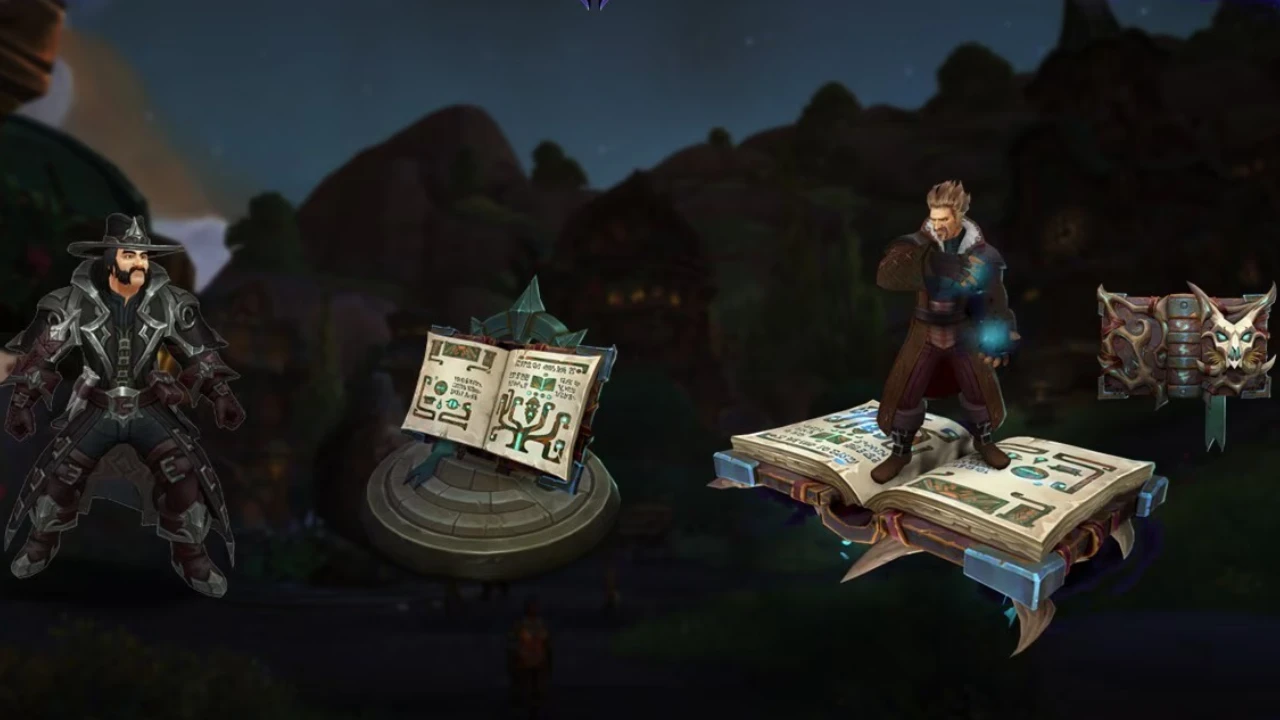
Blizzard's preview of Talebound cosmetic rewards.
The clearest collection targets are the rewards Blizzard has explicitly previewed. Wowhead's updated guide also lists four companion pets from PTR coverage. The distinction matters: a reward appearing in the database does not reveal its final price, unlock condition, or availability by itself.
| Reward | Type | Current Status |
|---|---|---|
| Shadowbound Storybook | Mount | Officially previewed by Blizzard. |
| Ensemble: Witch Hunter's Shadow Attire | Transmog | Officially previewed by Blizzard. |
| Quillgrave Storyteller's Lectern | Housing decor | Officially previewed by Blizzard. |
| Quillgrave Talebound Shadowtome | Housing decor | Officially previewed by Blizzard. |
| Hex-Cursed Manifestation | Companion pet | Listed among Talebound rewards in PTR coverage. |
| Inquisitor's Messenger | Companion pet | Listed among Talebound rewards in PTR coverage. |
| Slayer's Faithful Tracker | Companion pet | Listed among Talebound rewards in PTR coverage. |
| Zyg'ee | Companion pet | Listed among Talebound rewards in PTR coverage. |
Shadowbound Storybook and Witch Hunter's Shadow Attire
The Shadowbound Storybook is the most recognizable officially previewed mount: an enchanted book you ride rather than another conventional beast. The transmog ensemble offers a different reason to collect. Its listed pieces include a Jacket and Vest, plus Kilt and Pants alternatives. Those choices make it worth inspecting individual appearances instead of judging the entire ensemble from one promotional pose.
Additional Datamined Housing Decor
Wowhead's guide also shows objects such as Quillgrave Craftsman's Workmill, Quillgrave Arcanist's Alembic, Quillgrave Scribe's Gemstation, Quillgrave Outfitter's Loom, Heartsbane Wicker Effigy, and Drust-Carved Rune Pillar. These are datamined entries, not a fully confirmed shopping list. Their presence does not establish that every object will launch as a Talebound purchase. For a collection budget, prioritize the explicitly previewed lectern and Shadowtome until acquisition details become available.
Talebound FAQ
Can you play Talebound solo?
Yes. Blizzard explicitly supports playing alone or with friends. That does not mean every encounter or class will feel equally easy, and there is not enough confirmed information here to present a definitive solo tier list.
Do you use your normal World of Warcraft character?
No. Talebound uses newly created characters with Slayer, Inquisitor, or Witch ability kits. The collection rewards are intended for your wider World of Warcraft account.
How many runs does the mount require?
A reliable number cannot be established without final pricing, earning rates, and unlock conditions. Shadowbound Storybook is confirmed as a reward, but a precise farming estimate would currently be speculation.
Talebound is most interesting as both a new combat format and a collection project. Start by finding the class you enjoy, learn how the stories punish mistakes, and use Quillgrave to address those problems. The mount and cosmetics give you a destination; understanding the mode should make the journey more enjoyable than blindly repeating runs.
POPULAR NEWS